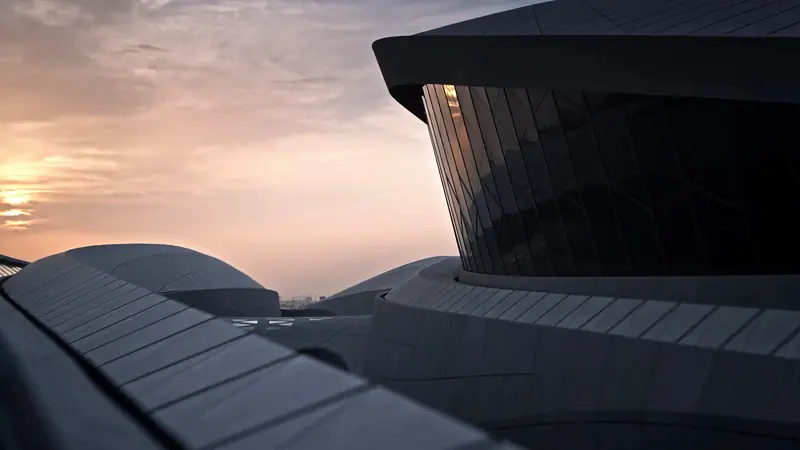
Zaha Hadid Architects is an architecture and design practice based in London, founded in 1979 by Dame Zaha Hadid. It designs buildings, interiors, masterplans and products, and the company is owned by its employees.
The practice began as a one-room studio and grew into a global one. Hadid had studied at the Architectural Association School of Architecture in London, and her practice became known for futuristic, fluid forms.
Early built work includes the Vitra Fire Station in Weil am Rhein, Germany, where deconstructed forms and dynamic lines define the building. The Rosenthal Center for Contemporary Art in Cincinnati is another commission with unconventional spaces. The practice also designed the Guangzhou Opera House in China, the London Aquatics Centre, built for the London Summer Olympics, and the Heydar Aliyev Center in Baku, Azerbaijan. Its projects span cultural institutions, infrastructure and residential buildings.
Its expertise runs from architecture and interior architecture to masterplans, virtual spaces, workplace consultancy, exhibitions, and installations and pavilions. Products sit within the same range, from small product collaborations to grand masterplans. The practice takes on work at all scales and in all sectors.
Research shapes how the practice works: its teams experiment, test and refine ideas, then look for ways to build them. Architects, designers and coders work together in the practice. On sustainability it has produced a Low Carbon Strategy Handbook and applies AI-assisted climate modelling to its design work. It reinvests all profits in its people and the company.