Grisebach is an art auction house based in Berlin, Germany, and was founded in 1986. It sells art from the early nineteenth century to the present from the Villa at Fasanenstraße 25, and it keeps teams in Düsseldorf, Munich and Zurich.
Five art dealers founded the house in Berlin, and Bernd Schultz, a merchant's son from Bremen who had become a partner in the gallery of Hans Pels-Leusden, drove the project. Wilfried Utermann, who runs the Dortmund gallery Utermann, Raimund Thomas, a Munich dealer in classical modernism, and Michael Neumann of Düsseldorf joined him. Its conditions of sale went beyond the dealer liability usual at the time: the house vouches for the authorship, technique and signature of the works it auctions, as far as current scholarship allows.
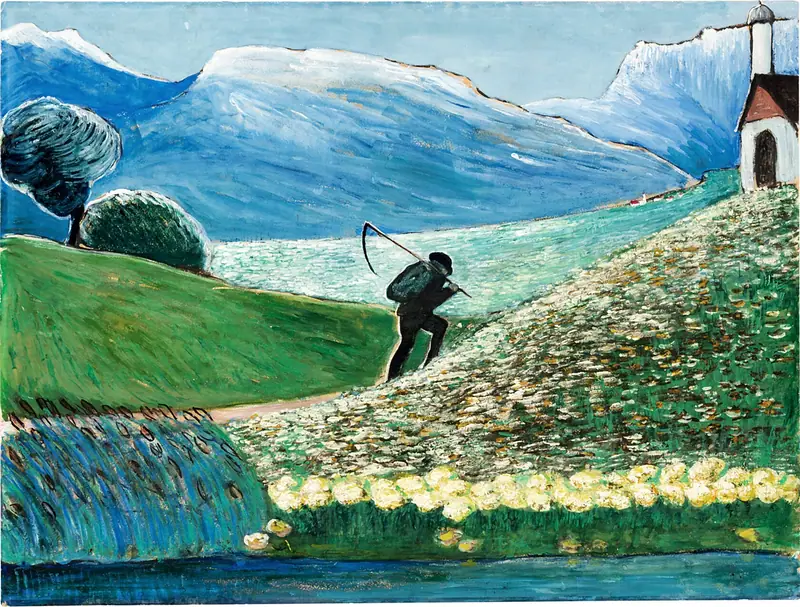
The sales cover German Impressionism and Expressionism, Realism and New Objectivity, with Lyonel Feininger's Raddampfer II and Max Beckmann's portrait Anni among the works the house has sold. Photography entered the regular sales in 1998, and nineteenth-century art received its own auctions in 2011. A department for collectible objects from antiquity to the modern era, called Orangerie, was set up in autumn 2012.
Research underpins the work. Berlin lies close to the large museums, and the house draws on collectors, experts, restorers and provenance researchers. Between the publication of a catalogue and the auction, the Villa works as a temporary museum for the consigned works. The house also publishes a magazine and a podcast, Die Sucht zu Sehen, in which guests from art and culture speak every two weeks.