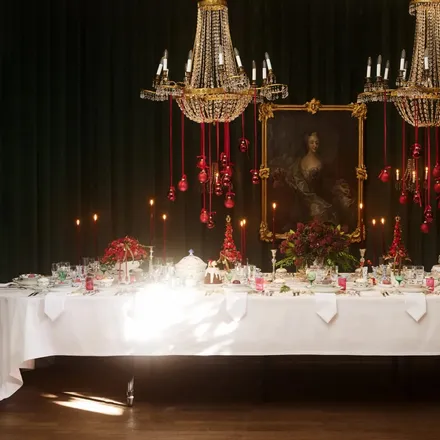
Royal Copenhagen is a Danish porcelain manufactory founded in Copenhagen in 1775 by the apothecary Frantz Henrich Müller, under the patronage of the Dowager Queen Juliane Marie. It belongs to the Fiskars group, and its flagship store has stood since 1911 at Amagertorv 6, in a Renaissance building from 1616.
From the start the factory concentrated on blue-painted underglaze porcelain, and Blue Fluted Plain became its first pattern, Pattern No. 1. When the young business ran into financial difficulty, the King took responsibility for it and it became the Royal Danish Porcelain Factory. Later the designer Arnold Krog turned an early full lace dessert plate into the Blue Fluted Full Lace dinner service and added the simpler Blue Fluted Half Lace.
The blue collections are painted under the glaze with a tool like a fountain pen, so that the fine lines stay sharp beneath a clear glaze. Flora Danica, Purpur and Emerald are painted over the glaze instead, so their decoration sits on the surface and can be felt. Every piece carries the factory's three blue waves on its back.
In the twentieth century artists such as Thorkild Olsen, Axel Salto, Gertrud Vasegaard and Grethe Meyer created dinner services and art pieces for the factory. Later designs include Louise Campbell's Blue Elements and a reworking of Half Lace by the design duo GamFratesi, with creatures from the shore and the sea.