One Palace Green, Philip Webb and Pilbrow & Partners
A rare Arts & Crafts residence overlooking Kensington Palace Gardens enters a new chapter through a carefully considered restoration by REDD Real Estate.
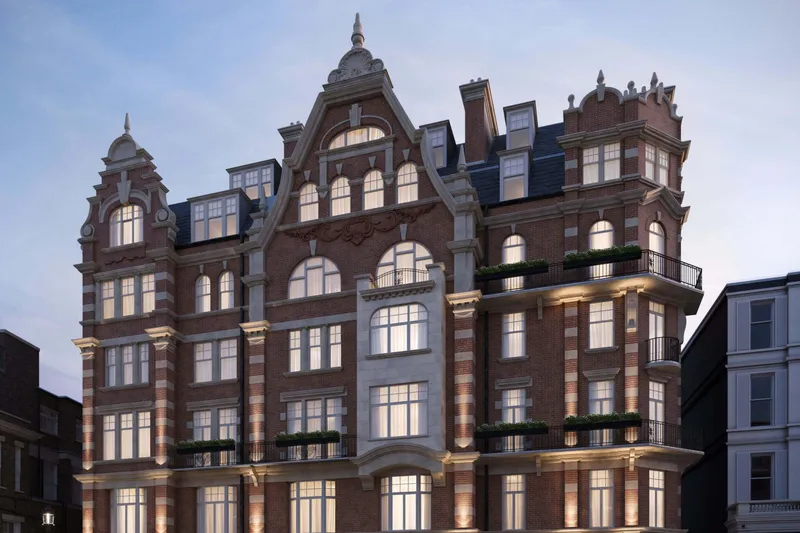
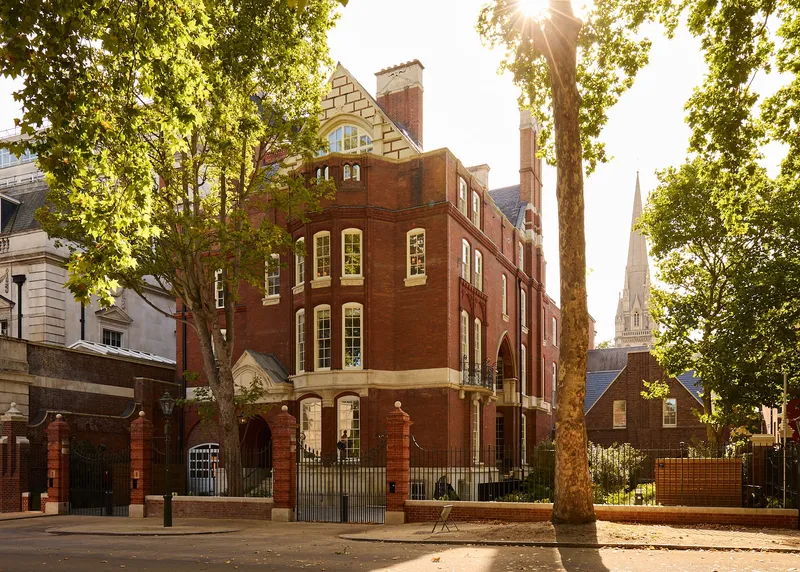
Originally designed in 1870 by Philip Webb for artist George Howard, later the 9th Earl of Carlisle, One Palace Green is among London’s most significant surviving Arts & Crafts residences. Now restored and converted into five private apartments and a detached coach house, the Grade II*-listed property combines Victorian architectural heritage with contemporary residential design.
Occupying a quarter-acre site at the southern end of Kensington Palace Gardens, the 19,200-square-foot mansion was commissioned by Howard and his wife Rosalind, with further additions completed in 1874. Developer REDD Real Estate appointed Pilbrow & Partners to lead its architectural transformation, working alongside conservation specialists Donald Insall Associates. Martin Kemp Design directed the interiors, while landscape architect Randle Siddeley designed the private garden. The project preserves the architectural principles established by Webb, a founding figure of the Arts & Crafts movement, while adapting the building to accommodate six residences priced from £15 million.
The finest heritage projects don’t preserve buildings as museum pieces. They allow them to evolve with sensitivity and integrity, so that another generation can enjoy them in ways that are relevant to modern life. — Martin Kemp, Founder, Martin Kemp Design
The restoration places particular emphasis on craftsmanship and original decorative details. Historic plaster mouldings, timber panelling, dado rails and Lincrusta wallcoverings have been conserved or reinstated. These sit alongside natural stone, handcrafted ceramic tiles, timber flooring and bespoke joinery, creating interiors informed by Webb’s architectural language without attempting to reproduce an entire Victorian decorative scheme.
The three-bedroom first-floor show apartment illustrates this approach through generous reception rooms, dual-aspect views towards Kensington Palace and a restored period fireplace. Its interior palette references the neighbouring gardens through moss greens, warm earth tones and pale stone shades, complemented by tactile linens, textured timber and bespoke upholstery.
One of the building’s most historically important spaces is the original dining room, which incorporates decorative contributions associated with William Morris and Edward Burne-Jones. Morris designed its decorative scheme, including a ceiling and inscriptions drawn from his narrative poem The Earthly Paradise. Burne-Jones created Cupid and Psyche canvases inspired by the same literary work. These surviving elements have undergone detailed conservation.
Elsewhere, George Howard’s former artist’s studio has become a residential living room with a 15-foot ceiling and large picture windows overlooking Kensington Palace Gardens. Three paintings by Howard, believed to have been created during his residence, feature in an art collection curated by Daniel Morris Art Advisory.
Martin Kemp Design also developed the communal entrance, incorporating a bespoke walnut concierge desk by Asplin Whiteley and a contemporary reinterpretation of a historic Howard portrait, commissioned in collaboration with Saatchi Art.
The development offers landscaped private gardens, secure parking, concierge services and property management. A ground-source heating and cooling system serves the entire site without a gas supply. Four layers of security incorporate controlled access, professional personnel, advanced monitoring and individual residential protection. Kensington Palace Gardens remains one of London’s most closely controlled residential addresses, distinguished by its diplomatic residences, mature landscape and proximity to Kensington Palace. One Palace Green’s relatively small collection of homes preserves an unusually direct relationship with this historic setting.
The property’s identity also reflects its architectural provenance. Designed by creative consultancy Greenspace, its visual language draws on historic collectors’ marks, with three bespoke symbols referencing the Howard family, Kensington Palace Gardens, and Philip Webb and William Morris.
For further information, visit onepalacegreen.com